








Raymond Haruna.
This article examines the tenure of the University of Jos Vice-Chancellor, Prof. Tanko Ishaya, which began in December 2021 and ends in November 2026, focusing on his leadership, achievements, controversies, and the public perception of his administration. The immediate trigger was the June 2026 controversy surrounding an “Academic Leadership Excellence Award” presented to him by NAPSS, University of Jos, which generated mixed reactions on social media. The debate was reinforced when ASUU National President, Prof. Chris Piwuna, publicly commended Ishaya for improving staff welfare through prompt payment of allowances. But it is quite unusual to find union leaders applaud Vice Chancellors especially as they consider them As part of the establishment. So it makes it all the more interesting to undertake this investigation.
As a University of Jos alumnus and a rising scholar, the writer considers it necessary to examine these issues objectively, distinguish legitimate criticism from misinformation, and contribute to informed public discourse about the Vice Chancellor and the institution.
Following approval from the University of Jos Management, relevant institutional documents, reports, and news materials were examined, while interviews were conducted with representatives of ASUU, NASU, NAPSS, Directorate of Students’ Affairs, Phytomedicine, Sports Committee, Procurement, Physical Facilities, Department of Music, and Information and Protocol. Interviewees provided information on different aspects of the University and consented to the recording and transcription of interviews. Snowball sampling was also used to identify additional knowledgeable respondents.
THE CONTROVERSY OVER VICE-CHANCELLOR SELECTION
In April 2021, Premium Times Magazine reported protests by students, student leaders, and staff over the selection process for a new Vice-Chancellor following the death of Pro-Chancellor and Chairman of Council, Chief Tony Momoh. The NUC directed that the process be halted over alleged non-compliance with established procedures. Public discourse also reflected concerns that a non-indigene of Plateau State could become Vice-Chancellor, highlighting Nigeria’s broader indigene-settler divide, where origin can sometimes compete with merit and competence.
Similar disputes have occurred at the University of Ibadan, Lagos State University, University of Benin, and Federal University Dutse. In contrast, leading international universities increasingly emphasise merit and international recruitment. The appointment of Cambridge Vice-Chancellor Prof. Deborah Prentice, who had no prior academic or professional connection with Cambridge or the UK, illustrates how leadership experience, scholarship, research, and international outlook can take precedence over origin.
PROF. TANKO ISHAYA: EDUCATION AND PROFESSIONAL EXPERIENCE
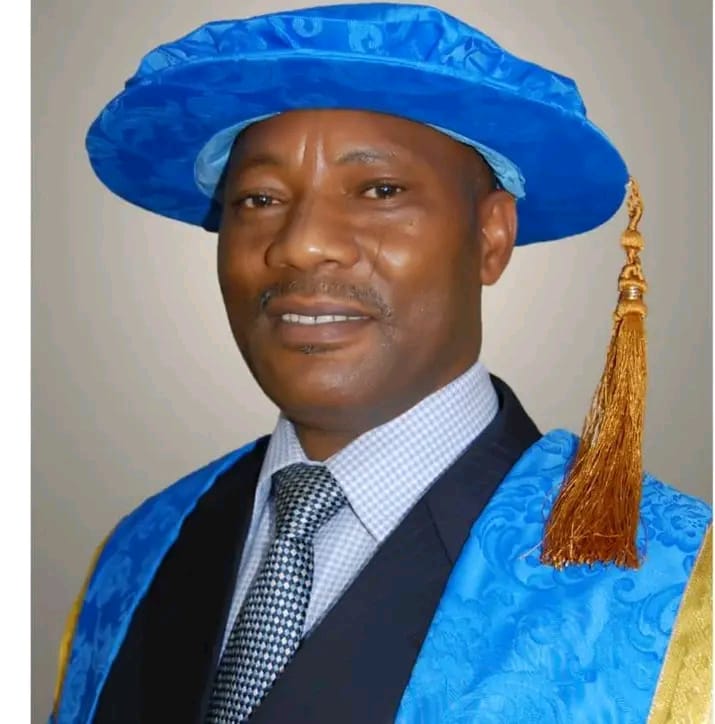
Prof. Tanko Ishaya holds a B.Ed. in Mathematics from the University of Jos and an MSc and PhD in Computing from the University of Manchester. His expertise includes Data Science, Artificial Intelligence, eHealth, cybersecurity, digital forensics, and trustworthy computing, backed by nearly three decades of professional and technical experience.
He has served on several national and international committees and advisory bodies and worked as an IT consultant and lecturer at the University of Hull before returning to the University of Jos in 2012 as Director of ICT and pioneer Head of the Department of Computer Science. He has supervised five PhD and 54 MSc students, served as Principal Investigator and Co-investigator on several projects, and secured over $3 million in competitive research funding.
Prior to becoming Vice-Chancellor in December 2021, Ishaya served as Deputy Vice-Chancellor (Academic), during which the University increased its annual research grants from 3 to 9.
LEADERSHIP, STAFF WELFARE AND STUDENT RELATIONS
Stakeholders interviewed described Prof. Ishaya as humble, accessible, accountable, empathetic, considerate, humane, reasonable, selfless, forgiving, magnanimous, focused, and goal-oriented. One example cited was his decision not to use a new official vehicle for four years despite being entitled to one. He was also credited with supporting staff and students during difficult periods, including providing free transportation for staff during the fuel-price crisis and showing concern for families of deceased students.
His approach to students’ discipline was described as rehabilitative. In cases involving students caught with illicit substances, he reportedly adopted a reintegrative approach rather than relying exclusively on severe punishment. This reflects the criminological principle of reintegrative shaming, which condemns misconduct while allowing the offender an opportunity for correction and reacceptance.
The NAPSS UNIJOS President stated that the Vice-Chancellor’s tolerance of student protests and criticism contributed to the decision to honour him. Even when students protested and disrupted banking activities at Naraguta Campus, the VC did not seek their identities or impose disciplinary measures. This is evidence of democratic leadership and respect for freedom of expression.
Other achievements cited include attracting about 60 foreign students to the University for the first time, renovating Abuja and Naraguta hostels, improving sporting infrastructure, and working with security agencies to evacuate students from crisis flashpoints.
HOSTING NUGA AND ITS SOCIOECONOMIC IMPACT
The hosting of NUGA in November 2025 marked the first time in the 50-year history of the University of Jos and the first time a North-Central Nigerian university hosted the games. Despite inadequate facilities, Prof. Ishaya reportedly lobbied successfully for the hosting right and mobilised support from politicians, education bodies, foundations, companies, and embassies for successful hosting.
The University upgraded sporting facilities and provided accommodation, transport, medical, and entertainment services. More than 200 UNIJOS students participated in about 23 sports, with the institution finishing second overall. The games attracted about 10,000 athletes, officials, and spectators, benefiting hotels, transport operators, food vendors, and other businesses.
NUGA also reportedly contributed to the designation of the University of Jos as one of Nigeria’s 10 sports centres of excellence, creating opportunities for programmes in sports science, management, journalism, administration, and law.
In addition to building networks, NUGA changed people’s perceptions about the safety and security situation in Jos as there was no single gory incidence throughout the competition.
AFFILIATIONS, NEW PROGRAMMES AND ACADEMIC EXPANSION
The University has expanded its affiliation network under Prof. Ishaya, including agreements with the Federal College of Education (Technical), Bichi, and College of Education Gindiri, while other institutions await NUC accreditation.
Thirty-seven new programmes have reportedly been introduced across Education, Veterinary Medicine, Health Sciences, Pharmacy, Social Sciences, Arts, Architecture, and Computing, alongside the establishment of the Faculties of Architecture and Computing. Senate has also approved 44 postgraduate programmes in the Institute of Education and considered new programmes in areas including Mass Communication, Veterinary Medicine, Entrepreneurship, Innovation, Library and Information Science, and Criminal and Social Justice.
A Centre of Excellence in Food Security has also been approved, with 26 postgraduate programmes covering livestock production, agricultural economics, and disaster risk management.
RESEARCH AND INNOVATION
The University has recorded notable research and innovations during the tenure of Ishaya. The Africa Centre of Excellence on Phytomedicine Research and Development has produced research outputs including COVID tea, anti-snake venom, and an anti-tick vaccine. According to its Director, Prof. Abraham Dogo, Ishaya reopened the Centre after funding ceased and increased its funding by about 500 percent, contributing to research expansion and the attraction of more than 20 international students from African countries to the centre alone.
A University of Jos engineering team also won ₦70 million for developing a solar-powered robotic device capable of detecting diseases affecting crops such as potato, maize, and ginger. The Vice-Chancellor expressed interest in supporting its commercialisation.
The VC also facilitated TETFund’s inspection and upgrading of research laboratories, including the Disease Surveillance, Multi-omics laboratory, and some laboratories at UNIJOS Shool of Veterinary Medicine, resulting in a ₦1 billion allocation. These initiatives strengthen the University’s capacity for research, innovation, intellectual property, and socioeconomic contribution.
STATE OF FACILITIES AND PHYSICAL INFRASTRUCTURE
In addition to fencing the permant site of the University of Jos, expanding the faculty of Arts, and Pharmaceutical Sciences, massive interior works have also been carried out by Ishaya. Apart from building and equipping many laboratories, books and laboratory equipments have also been procured for practicals. Notably, the department of Music today is only second to Mountain Top University in terms of number and quality of musical instruments available in any Nigerian University. See links below for documents on some selected 198 projects by the administration of Prof. Tanko Ishaya.
- https://1drv.ms/x/c/542F20C3DDB7F039/IQDRkNr30-DkSLs_VTiJXvZgAQ3pX2IR0b4tHU1vqcni6kg
- https://1drv.ms/x/c/542F20C3DDB7F039/IQDA0zY8jPduSpsRm9fZ0R7mATGIX3PlnpCC0EqOR1Sj0Co
- https://1drv.ms/b/c/542F20C3DDB7F039/IQC0EtSf7-o5QpHHr4DUdjWwAee37l0XJiFcBcV2igUdybs
- https://1drv.ms/b/c/542F20C3DDB7F039/IQCfuvUY4xYLRol9lOMItuwZAS2GgqDffzNS_Pw01wKSKGA POWER CHALLENGE AND SOLARISATION EFFORT
The University’s solarisation project under the Rural Electrification Agency’s Energising Education Programme was reportedly secured through Prof. Ishaya’s lobbying efforts. The project seeks to address electricity expenditure reportedly ranging between ₦20 million and ₦80 million monthly.
The initiative is expected to provide reliable off-grid electricity, reduce dependence on diesel generators, and lower operational energy costs, making it a significant intervention in one of the University’s longstanding infrastructural challenges.
CONCLUSION
Evidence from stakeholder interviews, institutional documents, reports, and other sources presents a generally positive assessment of Prof. Tanko Ishaya’s tenure, particularly in student relations, staff welfare, research, innovation, sports, academic expansion, infrastructure, partnerships, and energy development. Challenges delimiting his administration are in budget approvals without adequate cash backing, hike in power bill, and lack of support from some stakeholders since emergence.
The University of Jos is supposed to be a community of objective intellectuals not a sanctuary of bigoted, parochial or narrow-minded individuals promoting needless controversies despite being stakeholders who would serve as moral rectitude of the society. It is suggested that persons elevated to power be given required support in order to achieve maximally.










+ There are no comments
Add yours