









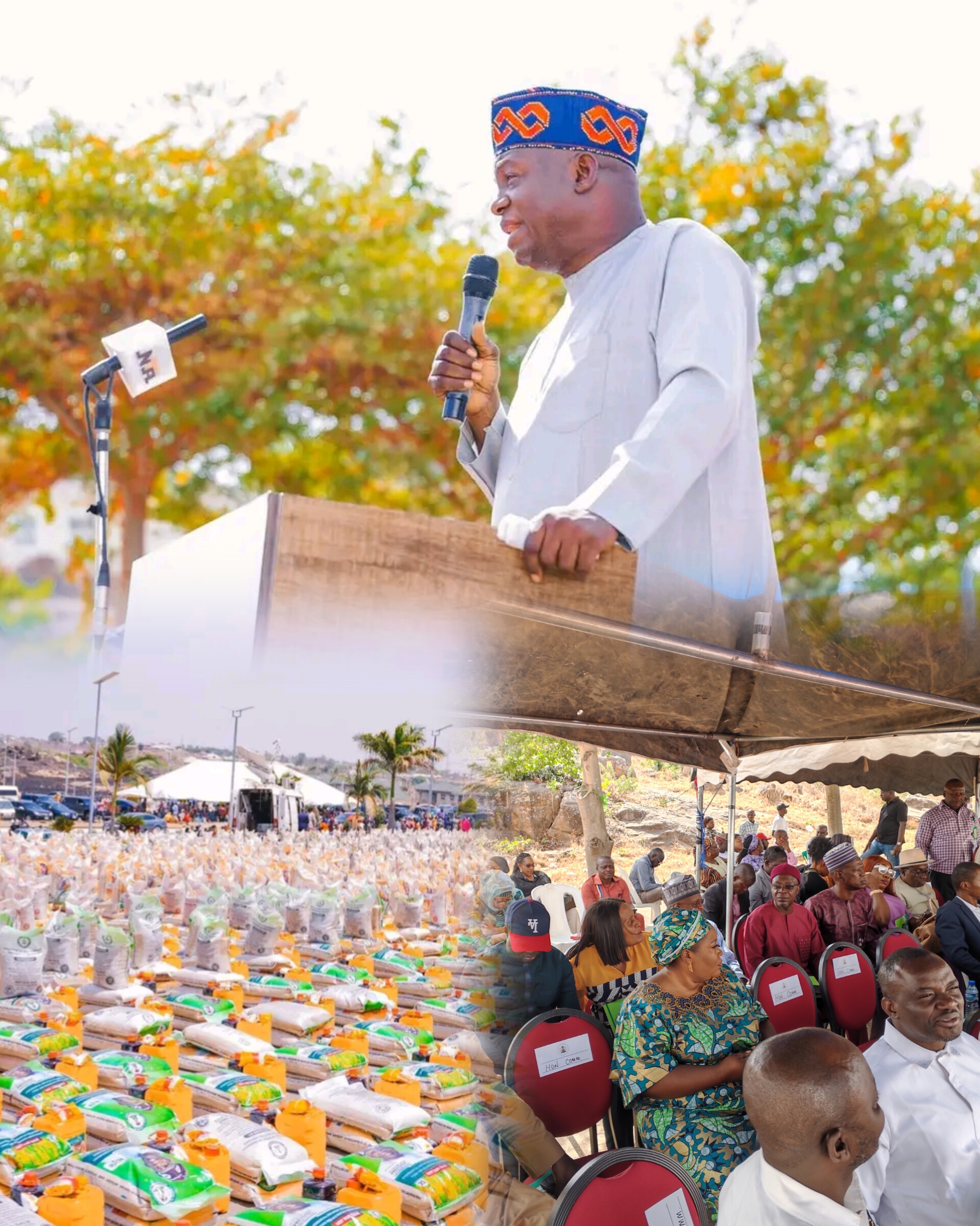
For many families across Plateau State, putting food on the table has become increasingly difficult in recent years. Rising prices, insecurity in rural communities and changing weather patterns have made farming and daily livelihoods more uncertain.
On Monday, the 9th March, 2026, Federal Government began a programme aimed at easing some of that burden for the most vulnerable households in the state. The initiative, launched under the Renewed Hope Agenda of President Bola Ahmed Tinubu, officially kicked off at the New Government House in Little Rayfield, Jos. Government officials, community leaders and representatives of humanitarian organisations gathered for the ceremony, but the focus of the programme is far from the conference hall, it is the thousands of families across communities who struggle daily to meet basic needs.
Through the intervention, food and nutrition supplies will be distributed to households considered most at risk. These include families headed by women, elderly citizens living alone, persons with disabilities and households caring for malnourished children.
Officials from the Federal Ministry of Humanitarian Affairs say the programme was created in response to growing food insecurity in parts of northern Nigeria. In Plateau State, recurring communal clashes in farming communities, climate-related shocks and economic challenges have all combined to affect agricultural production and household incomes. Permanent Secretary at the Ministry of Humanitarian Affairs and Poverty Reduction, Olubunmi Olusanya, said many rural families have found it increasingly difficult to maintain stable sources of food and income.
According to him, the intervention is meant to provide immediate relief while the government works on longer-term solutions. Plateau State officials welcomed the programme, describing it as timely for many communities still recovering from disruptions to farming and local markets.
Secretary to the State Government, Samuel Jatau, said the state administration would work with federal authorities and community leaders to ensure that the assistance reaches those who truly need it. Beyond the immediate distribution of food, the Federal Government says the programme is part of a wider strategy to help vulnerable households become more self-reliant over time.
Minister of Humanitarian Affairs and Poverty Reduction, Dr. Bernard Doro, explained that beneficiaries of the emergency assistance are expected to be linked to other support programmes such as conditional cash transfers, agricultural assistance and livelihood development initiatives.
The goal, he said, is to gradually move households away from emergency aid and toward more stable sources of income and economic opportunity.
As part of this effort, the government is also expanding the National Social Register, a database used to identify vulnerable households that qualify for social protection programmes.
Officials say strengthening the register will help ensure that support reaches people who need it most, especially in communities affected by poverty, displacement and economic hardship.
The government is also developing a National Anticipatory Action Framework expected to guide how authorities respond to disasters such as floods, droughts and other climate-related emergencies. The framework aims to help institutions respond earlier and prevent humanitarian situations from worsening.
Political leaders who attended the ceremony also called for greater cooperation among stakeholders in Plateau State.
The National Chairman of the All Progressives Congress, Nentawe Yilwatda, urged leaders across political divides to focus on development and the welfare of residents. He noted that several federal programmes including cash transfers, student loan schemes and expanded health coverage are designed to support citizens who face economic difficulties.
For many residents of Plateau State, however, the true impact of the initiative will only become clear when the supplies reach communities and families who need them most.
For households struggling to cope with rising food costs and uncertain incomes, even temporary support could make the difference between going hungry and getting through another week.











+ There are no comments
Add yours