









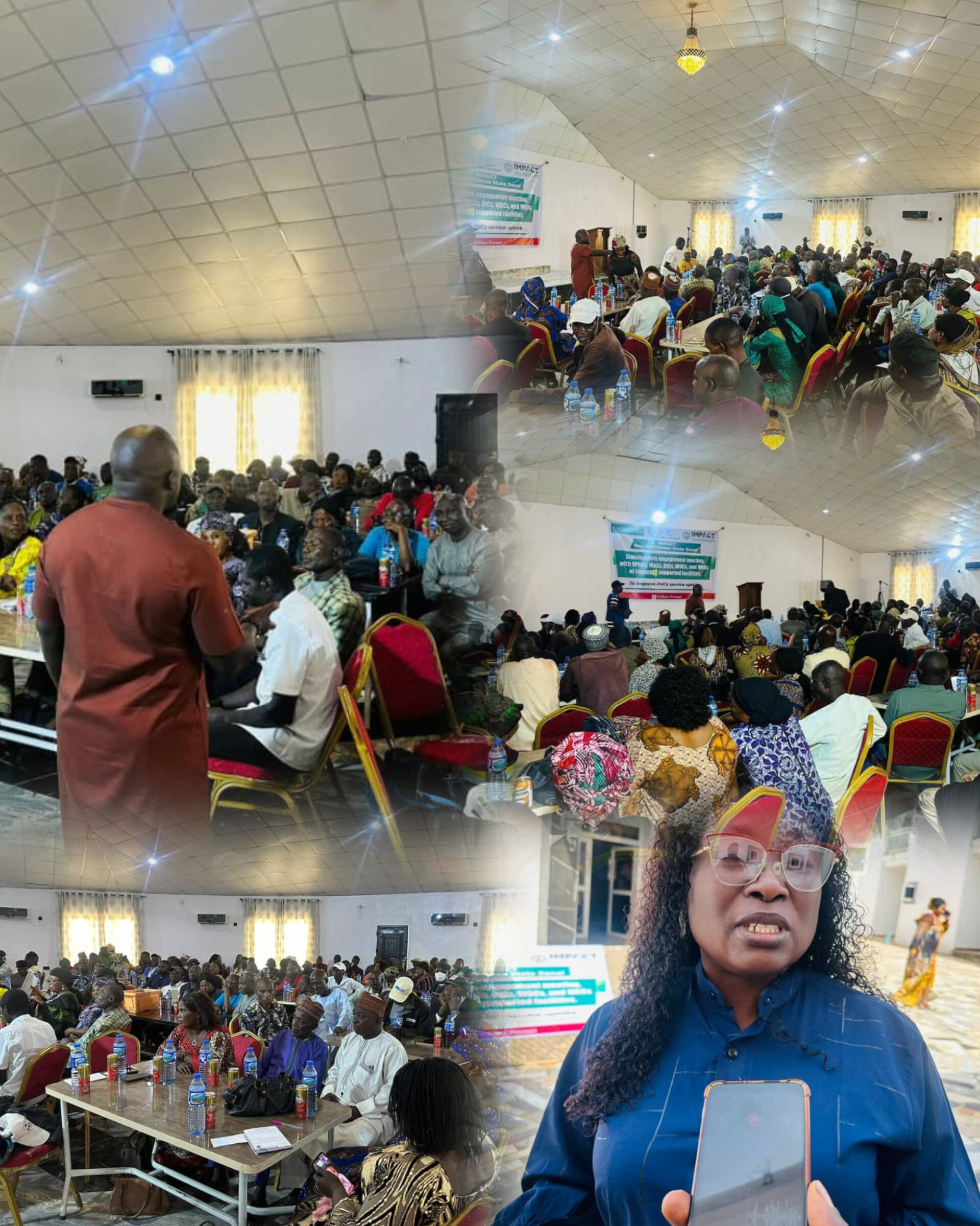
As part of efforts to boost service uptake in Primary Health Care Centres (PHCs) across Plateau State, the Immunization Plus and Malaria Progress by Accelerating Coverage and Transforming Services (IMPACT) project convened a high-level stakeholder engagement meeting on Thursday, 4th December 2025, at Villa Grande Hotel in Jos.
The meeting brought together Directors of Primary Health Care (DPHCs), Monitoring and Evaluation Officers (M&Es), Officers in Charge (OICs), Ward Development Committee (WDC) chairpersons, and Medical Record Officers (MROs) from IMPACT-supported facilities across the state. The discussions focused on reviewing progress, identifying gaps, and strengthening interventions geared toward improving maternal, newborn, and child health outcomes.
IMPACT Program and Project Manager in Plateau State, Nurse Ndak Kizito Zuhumnan, said the engagement was designed to review key health indices and assess the impact of ongoing interventions.
“We are here to examine what is happening with children under five—whether they receive timely treatment for fever, whether pregnant women attend antenatal clinics, and why some still give birth at home,” he said.
He highlighted concerns about low antenatal attendance, poor hospital delivery rates, and delays in taking newborns for immunization. Kizito emphasized the critical role of WDCs in mobilizing communities and educating residents through churches, mosques, and community meetings.
He also noted that essential resources—delivery kits, malaria testing kits, antimalarial medications (ACTs), and IPT3 for malaria prevention in pregnancy—have been made available free of charge in PHCs across the state.
“Our goal is to reduce infant and maternal mortality on the Plateau to the barest minimum. These stakeholders are key to helping us achieve that,” he added.
Chairman of the WDC in Jos Jarawa PHC, John Ajang Izang, expressed satisfaction with the improvements recorded across PHC facilities due to the IMPACT project.
“We have seen significant changes—from renovation of facilities to provision of affordable, high-quality medications and solar-powered infrastructure,” he said.
“Even the baby packs provided by the governor for new mothers have made delivery at PHCs free of charge and very attractive.”
Izang noted that the drug revolving scheme under IMPACT has ensured consistent availability of quality drugs without complaints of high prices.
Director of Primary Healthcare in Barkin Ladi LGA, Linda Chuwang, described the engagement as timely, especially for facilities still awaiting completion of upgrades.
“Some facilities in my LGA are not yet revitalized. We are glad to raise this here so that work can be hastened,” she said.
“A clean and attractive facility encourages mothers to seek antenatal and delivery services, which helps reduce maternal mortality.”
She added that IMPACT funding has supported the hiring of additional health workers, helping some PHCs operate 24-hour services.
Director of Primary Healthcare in Riyom LGA, Helen Damo, emphasized the importance of strengthening data reporting systems, noting that accurate data directly shapes health indicators at the state level.
“WDCs have a huge responsibility. They must sensitize traditional rulers and mobilize communities to improve coverage in maternal and child health services,” she said.
Monitoring and Evaluation Officer for the IMPACT Project in Plateau State, Benjamin Daniel Shankom, said the meeting was critical because WDCs serve as direct links to grassroots communities.
“We are implementing the project in 207 health facilities across the state,” he explained.
“With the information they have received here, WDC members will mobilize community members to patronize the facilities and access the services available.”
Other participants, including Chief Benaya Obiaboso from Jenta Apata and Choji Nyam from Township PHC, acknowledged the significant improvements recorded so far but appealed for additional staffing to meet growing service demand.









+ There are no comments
Add yours